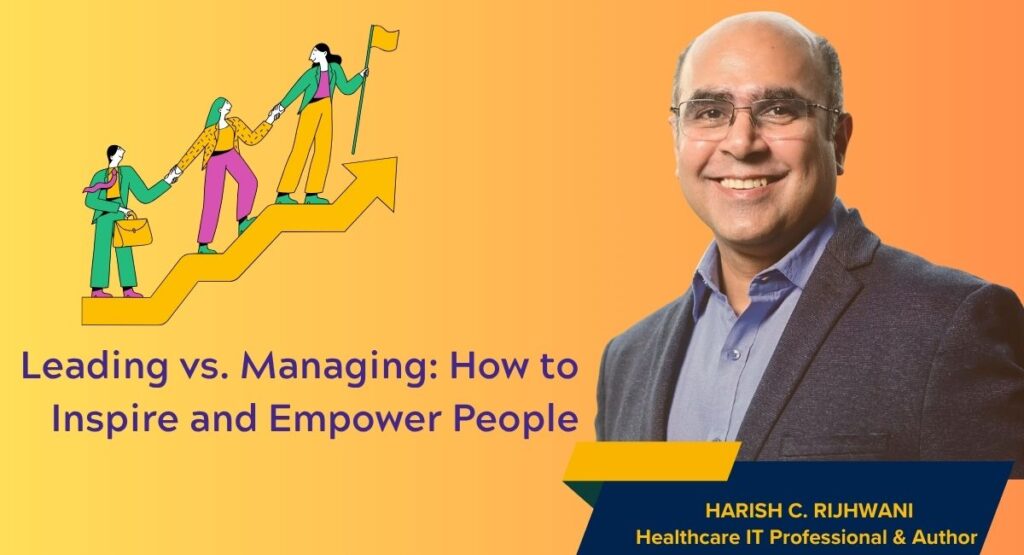
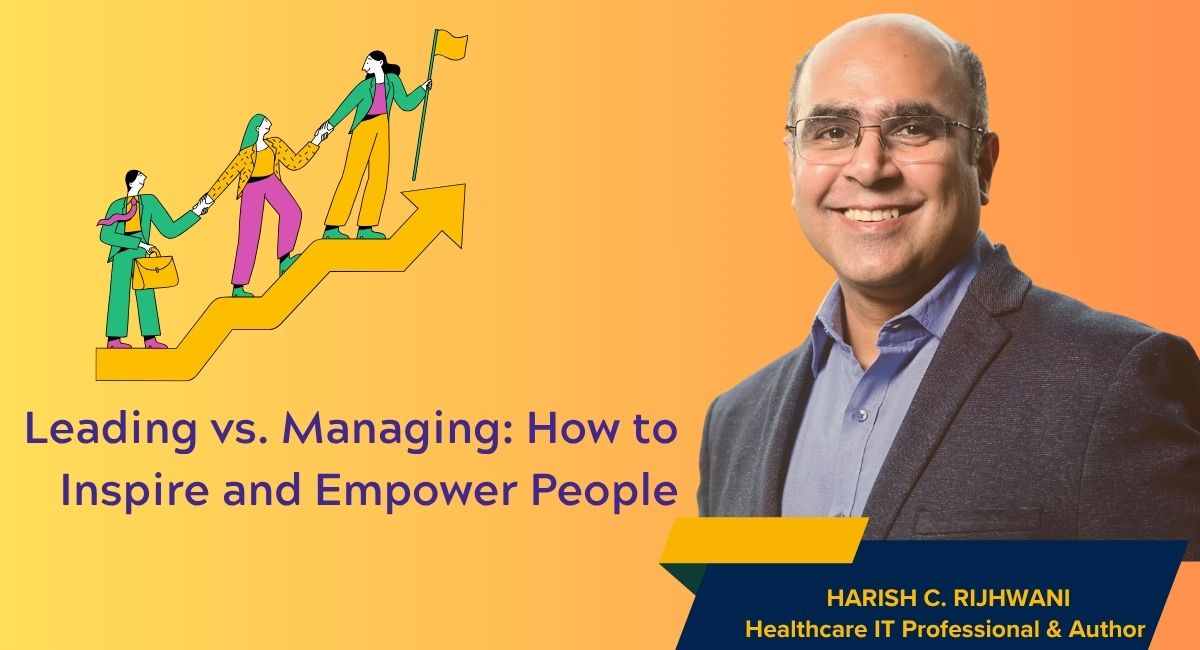

In today’s professional world, “Managing” and “Leading” are often used interchangeably during discussions and meetings. You might hear statements like: “You are a Leader, you need to manage the team.”
But in reality, there is more than meets the eye. While both are highly interrelated and important, each serves a distinct purpose in the professional world.
Managing is a term primarily focused on operational activities and is more task-driven. For example, there is a project deadline, but the team struggles for specific reasons. In this scenario, it is the manager’s responsibility to help improve the processes and overcome any blockers. There are many other activities a manager is involved in; a few are listed in the table below.
| Stakeholder Management | Risk Management | Training | Reporting |
| Delegating | Change Management | Forecasting | Appraisals |
| Compensation | Margin Management | Cost Management | Compliance |
| Planning | RevenueTracking | Recruitment | Audits |
| Managing Pyramid | Client Visits | Negotiating | Problem Solving |
Table 1: Key Management Activities
On the other hand, leadership is more than managing, it’s inspiring the team and making the team independent.
| Being Innovative | Good Listener | Overcome Challenges | Showcase flexibility |
| Motivates Team | Encourage Creativity | Weakness to Strength | Collaborates |
| Communication | Foster Positivity | Empowers Team | Anticipates problems |
| Coaching | Conflict Resolution | Eqanimity | Inspire Team |
Table 2: Leadership traits
The key question remains: how can we inspire and empower people? For that, let us look at some practical methods.
Focus on the process: One of the most powerful verses from the Bhagavad Gita offers us immense wisdom.
कर्मण्येवाधिकारस्ते मा फलेषु कदाचन।
मा कर्मफलहेतुर्भूर्मा ते सङ्गोऽस्त्वकर्मणि॥ २–४७
Translation: Do your duties (karma) without any expectations. Don’t worry about the results; don’t be attached to inaction. The interpretation means doing our work with dedication and diligence, but the outcome is not in our hands.
The same applies to the professional world, where we chase deadlines, targets, and other goals. Empowerment lies in focusing on the process with diligence, dedication, and thoughtfulness. We need to do everything we can in our work, and not be bothered about the outcome. If we focus on the process and do our part well, the outcome automatically gets achieved. In the end, even if we don’t meet the goal, we would have gained trust and knowledge we can leverage in the future.
Make your team independent of you: It is easy to say make your team independent, but practically difficult. People hesitate to delegate responsibility to others, fearing it will make them redundant. However, true leadership is when the team functions in your absence. Talking of absence, a good way to test your second level is to delegate your responsibilities to them when you take leave.
Lead by example: We fear challenges, which is a general response, but leadership is about seeing these challenges as opportunities. It’s easier said than done, but the reality is that if everything is Green, it will mostly be business as usual, and you can regularly observe and monitor metrics. However, in a Red project, you have to lead from the front and guide the team, which gives the team confidence.
Encourage out-of-the-box thinking: People often get engrossed in their day-to-day activities, so they don’t feel intellectually challenged. Creating an environment to think differently and research the latest trends provides opportunities for employees to come up with out-of-the-box ideas. Implementing hackathons and similar initiatives is a good way to encourage this thinking.
Push vs Pull mechanism for innovation: Employees are constantly surrounded by deadlines, and there are even monthly/quarterly targets for sharing and implementing new ideas. There is no harm in having deadlines, but we usually see a Push mechanism, wherein a manager says, “I have a deadline, Senior Management is asking me how many new ideas we have implemented, please share the same by the end of the day.”
In a Pull mechanism, the same ask can be implemented via competitions, be it hackathons, ideathons, writeathons, or any other initiative/creative way by which we can encourage teams to participate.
How can we empower the team? The Oxford meaning for Empower is ‘to give someone the power or authority to do something.’ The only way to achieve this in the corporate world is to trust the team and give them the freedom to make specific decisions. The simplest and relevant example can be of approvals. Junior/Mid-level management could provide approvals, like budget (up to a particular limit), and project decisions; this would help build confidence in the middle layer.
Equanimity: Another important lesson we learn from the Bhagavad Gita is related to equanimity.
योगस्थः कुरु कर्माणि सङ्गं त्यक्त्वा धनञ्जय।
सिद्ध्यसिद्ध्योः समो भूत्वा समत्वं योग उच्यते॥ २-४८
Translation: Being in Yoga, do actions, abandoning attachment, O Arjuna. Being equal to perfection and incompleteness is called equanimity.
Simply put, one must remain equanimous in success and failure. It’s easier said than done, but the above shloka encourages us to be stoic. One needs to be calm and centered in every situation, even when faced with a challenge. Encouraging this behaviour can inspire and empower people.
Conclusion: Managing and leading are two sides of the same coin. Management focuses on getting the work done, while leadership focuses on inspiring and supporting people’s growth. Empowering is about entrusting responsibility to your team without relinquishing your duties. It’s about building trust, fostering independence, creating a feel-good factor, and inspiring people to reach the next level. Focus on the process, be calm and collected in every situation, and results will follow, that is the jist of leadership.